Everything You Need to Know Before You Explore Nepal
Plan your journey with ease using our expert travel guide and tips, route guides, and local insights. From road conditions to must-visit destinations, everything you need to explore Nepal safely and confidently is right here.
Discover the touch of nature
Swipe to explore popular destinations
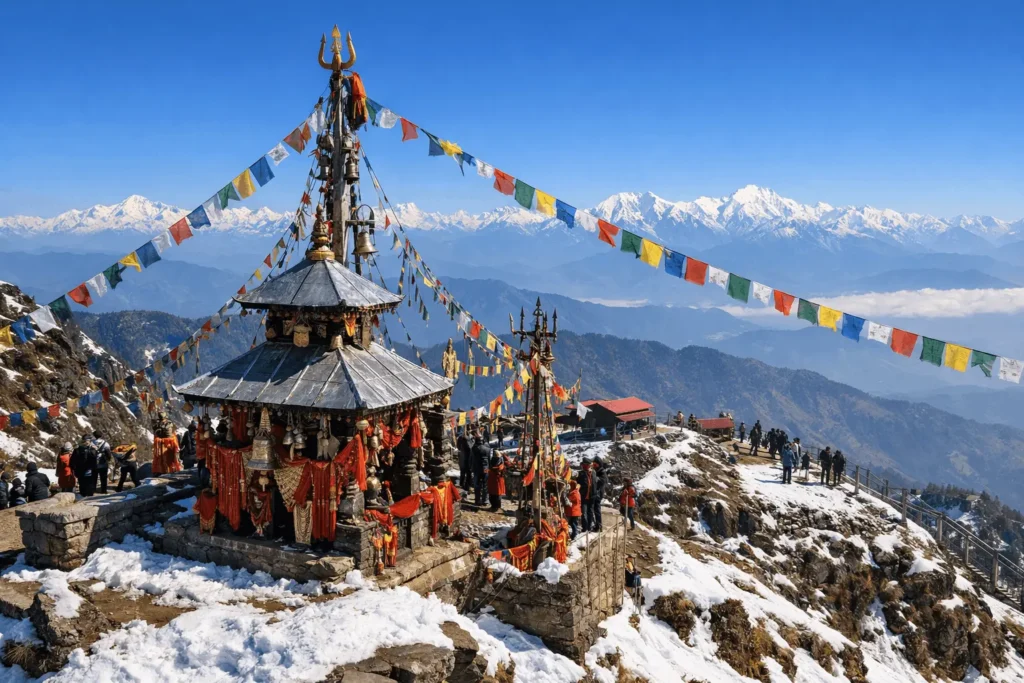
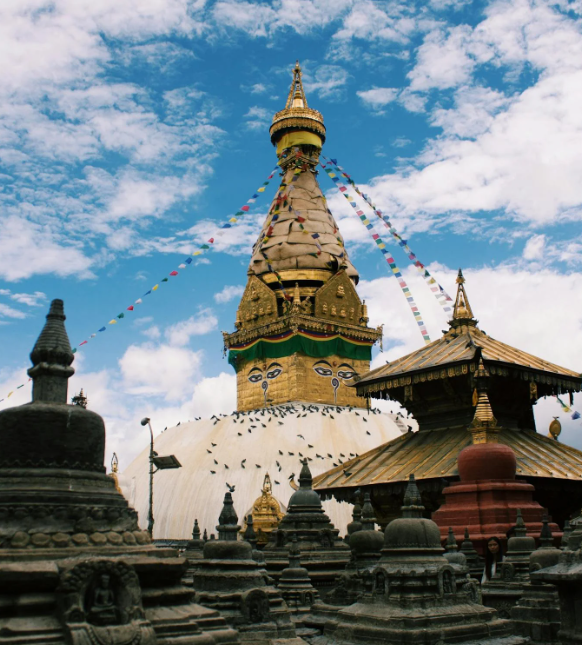
People don't take trips, trips take people
To get the best of your adventure you just need to leave and go where you like. We are waiting for you!

Turn your journeys into unforgettable stories.
Travel Guides & Tips
Expert advice for your next adventure

Upper Mustang Jeep Tour: Guide to Nepal’s Forbidden Kingdom
An Upper Mustang Tour offers overland adventures in Nepal, combining breathtaking Himalayan scenery with living Tibetan culture and remarkable historical heritage.Imagine driving through dramatic red cliffs, crossing high mountain deserts, passing centuries-old Tibetan villages, and finally arriving at the ancient walled city of Lo Manthang without strenuous trekking. Known as the Last Forbidden Kingdom ofContinue reading “Upper Mustang Jeep Tour: Guide to Nepal’s Forbidden Kingdom”
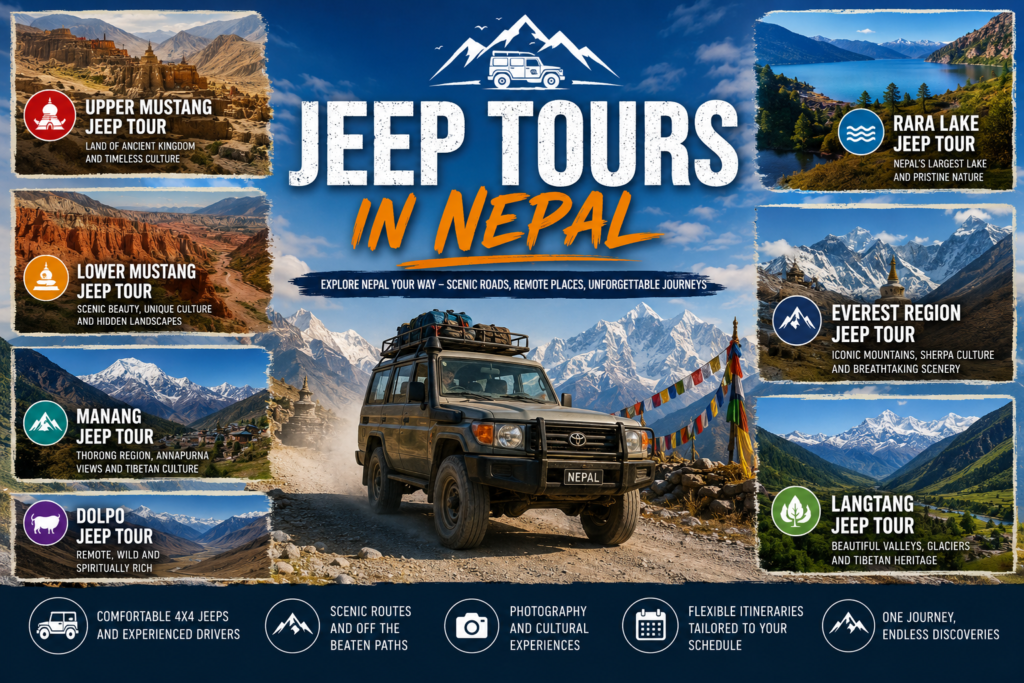
Guide to Jeep Tours in Nepal
Nepal is not only about trekking anymore. Over the past years, jeep tours in Nepal have become one of the most popular ways to explore the Himalayas comfortably, quickly, and safely. From the ancient kingdom of Upper Mustang to the sacred pilgrimage site of Muktinath, travelers prefer overland adventures that combine mountain scenery, culture, andContinue reading “Guide to Jeep Tours in Nepal”
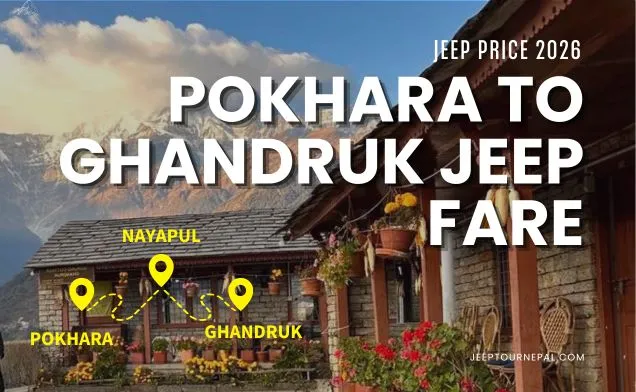
Pokhara to Ghandruk Jeep Hire Price 2026 – Complete Travel Guide
Planning a trip to Ghandruk? When it comes to journeying, one of the first questions on every traveller’s mind is usually “what is the price for a jeep from Pokhara to Ghandruk? You are not alone. Jeep travel provides easiest and most comfortable way to travel from Pokhara to Ghandruk. From Pokhara when you leaveContinue reading “Pokhara to Ghandruk Jeep Hire Price 2026 – Complete Travel Guide “
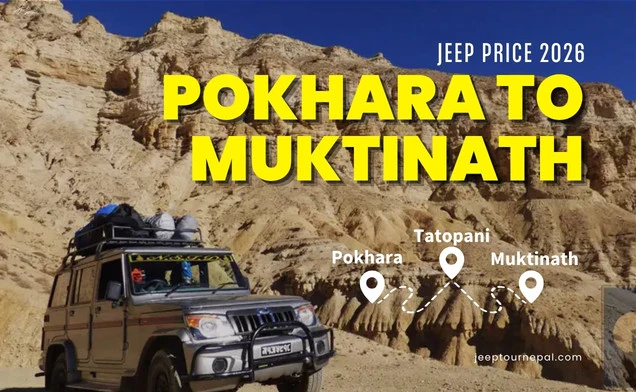
Pokhara to Muktinath Jeep Fare – 2026 Price
Traveling from Pokhara to Muktinath by jeep is one of the most popular and convenient options. It is best for pilgrims and tourists who want a faster and more comfortable journey compared to trekking or local buses. Muktinath is one of the most sacred pilgrimage sites in Nepal for Hindus and Buddhists and is locatedContinue reading “Pokhara to Muktinath Jeep Fare – 2026 Price”
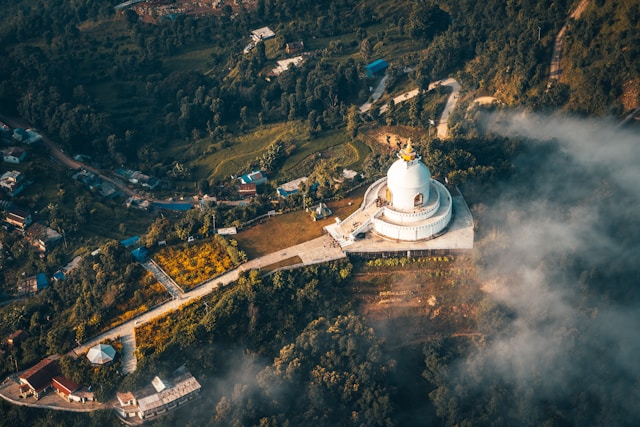
Best Places to Visit in Nepal in 2026: Your Complete Travel Guide
Nepal is a beautiful country in the Himalayas. It has stunning mountains, ancient temples, and friendly people. If you’re planning a trip to visit in Nepal, here are the top 10 best places to visit in Nepal. 1. Kathmandu Valley – The Heart of Nepal Why Visit: Kathmandu is Nepal’s capital city. It’s full ofContinue reading “Best Places to Visit in Nepal in 2026: Your Complete Travel Guide”
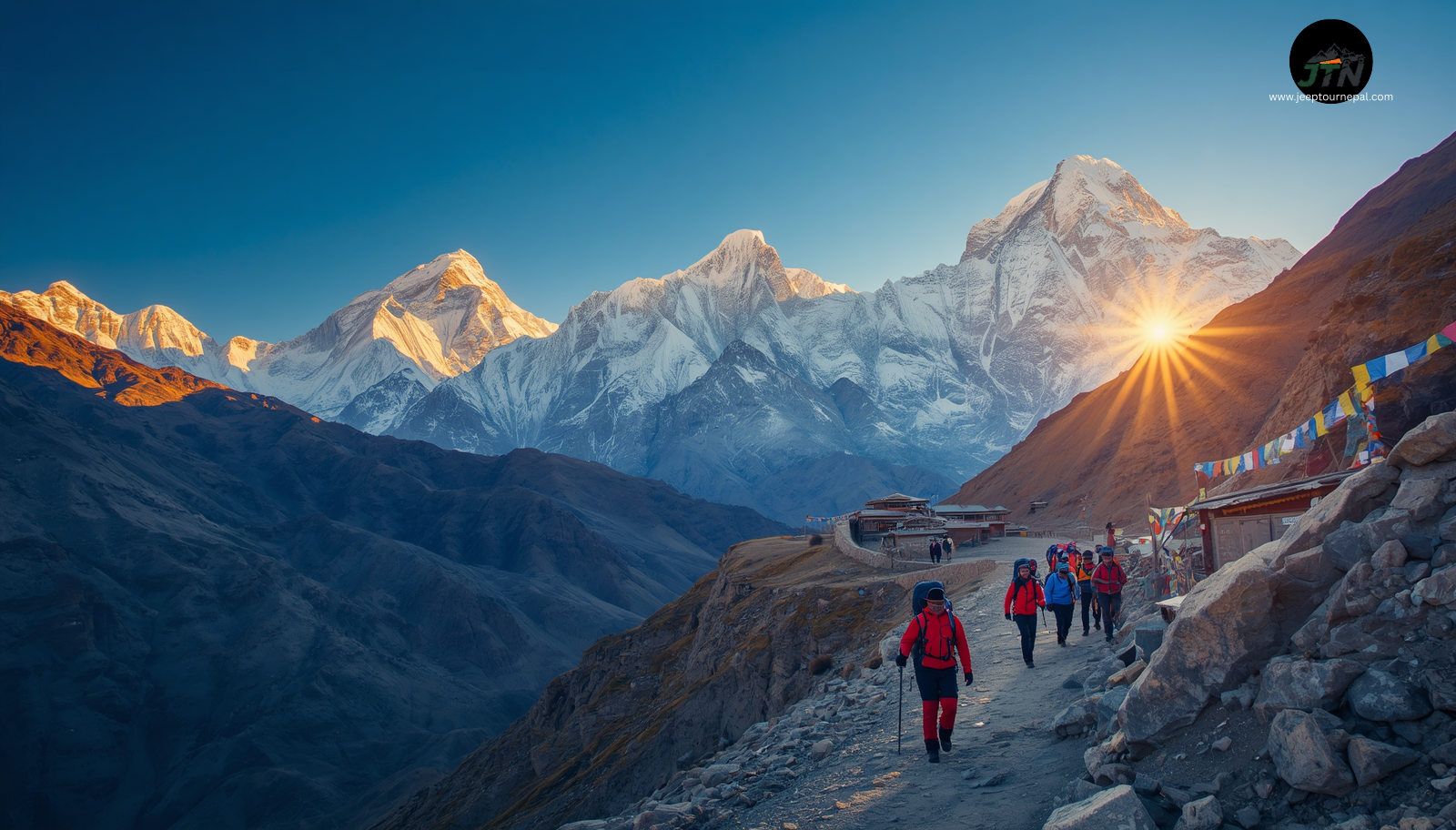
Everest Base Camp Trek 2026: Guide to Cost, Itinerary, Permits & Best Time
Introduction The Everest Base Camp trek is Nepal’s most famous Himalayan journey, taking trekkers through Sherpa villages, monasteries, and dramatic mountain landscapes to the base of the world’s highest peak. This comprehensive guide covers the Everest Base Camp trek itinerary, cost, difficulty, permits, and the best time to trek in 2026. Everest Base Camp TrekContinue reading “Everest Base Camp Trek 2026: Guide to Cost, Itinerary, Permits & Best Time”
Real journeys. Honest reviews.
Every experience shared here comes from genuine customers who explored with us. From smooth rides to unforgettable tours, their stories reflect the quality, safety, and care we deliver on every trip.
I thought I came to Nepal just for the mountains, but the jeep tour Nepal showed me hidden villages and stunning roads I would never have found on my own. Every moment felt like a real adventure!

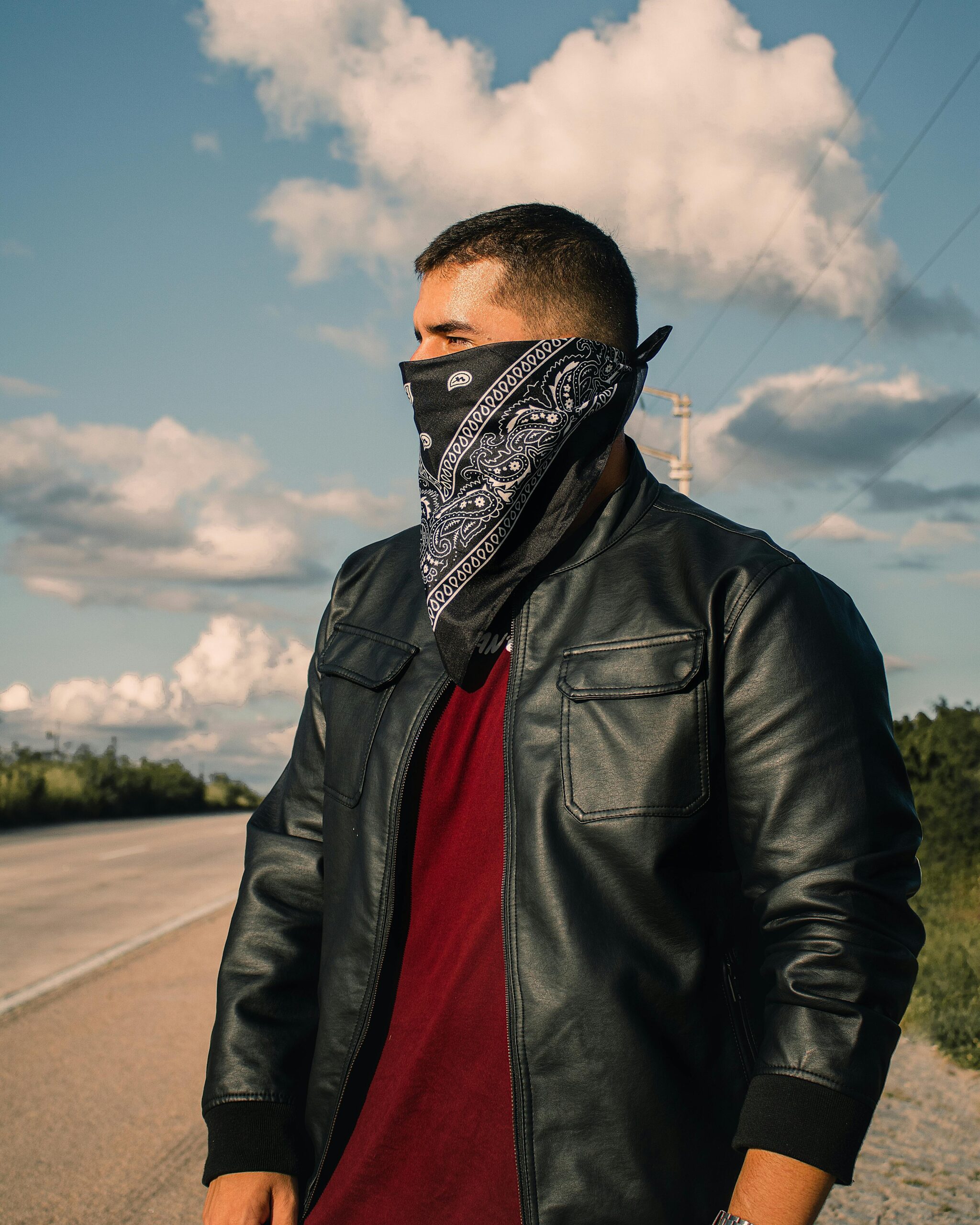

Traveling with kids can be challenging, but the jeep tours made it so easy. Comfortable, safe, and full of breathtaking scenery our whole family fell in love with Nepal.

From Rara Lake to the jungles of Chitwan, every destination felt magical. Seeing wildlife up close and waking up to Himalayan views was something I’ll never forget.

We wanted a mix of adventure and comfort. Jeep tours Nepal made it possible, we explored offbeat trails, remote mountains, and still enjoyed cozy accommodations. It felt like having Nepal all to ourselves.